Compare fixing-hole centres, distance from their centre line to the ceramic front, and bowl outline with the replacement drawing. Size names alone do not establish fit.
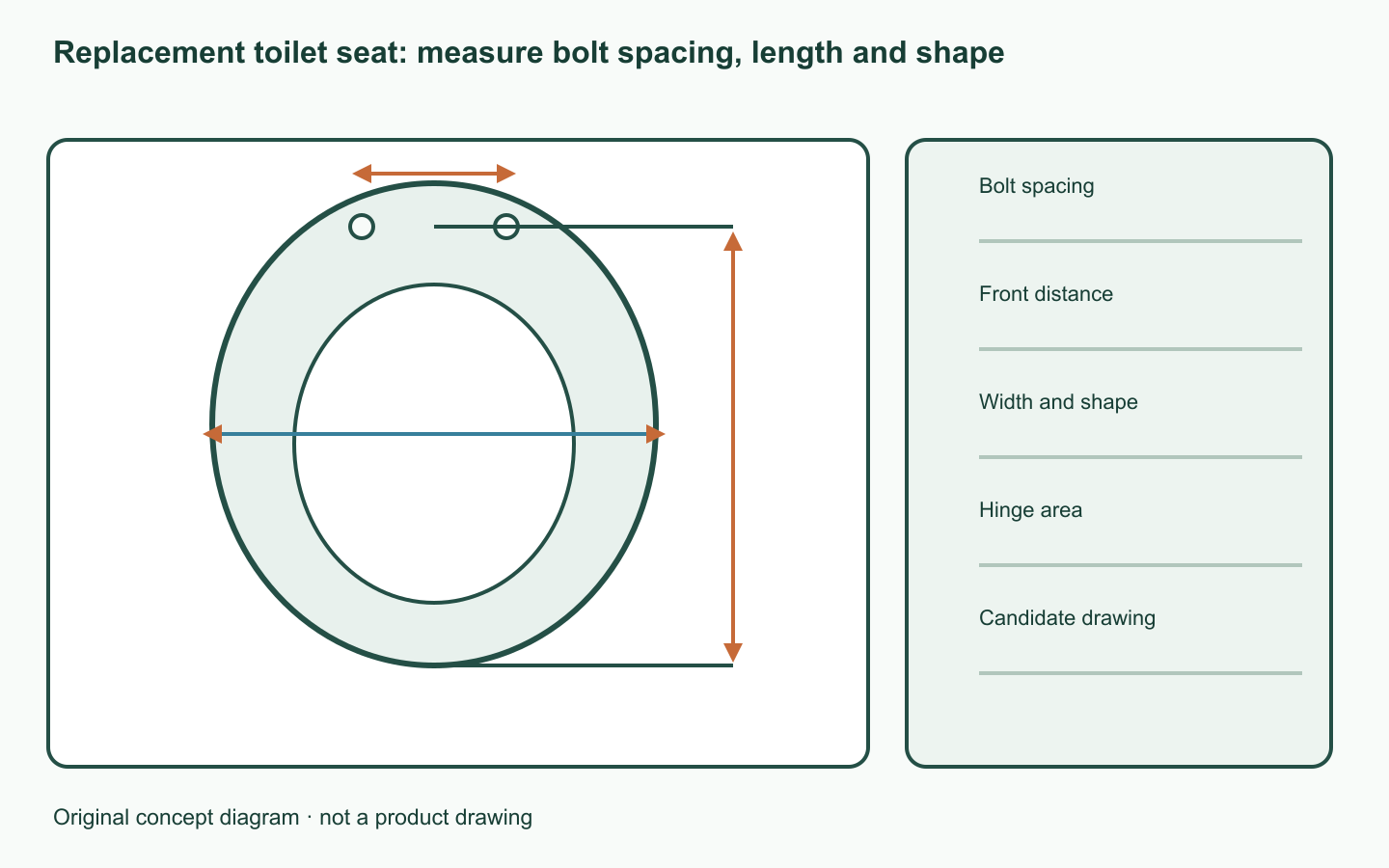
Measure from the hole centres
Measure centre to centre, then from that line to the ceramic front. Record maximum width and a top-view outline.
Shape names depend on the market
KOHLER’s US guide distinguishes round-front and elongated. Those names and example lengths are not universal standards across brands or countries.
Compare bowl and candidate
The old seat’s overall length can miss hinge-position differences. Compare adjustment range and ceramic measurements using identical reference points.
| Check | Record |
|---|---|
| Bolt spacing | Centre-to-centre millimetres |
| Front distance | Centre line to ceramic front |
| Width and shape | Maximum width and top-view photo |
| Hinge area | Tank clearance and fixing access |
| Candidate drawing | Same references and adjustment range |
Check hinges and fixing access
Check tank interference, fixing access and included hardware. This guide covers non-electric seats. A running cistern is a separate problem covered by the related guide.
A worked example
Hypothetical measurements: 140 mm bolt spacing and 450 mm front distance. A candidate’s overall length of 450 mm does not prove fit because the references differ. Request a drawing measured from the fixing centres.
Official sources checked
Official sources checked on 12 October 2026. Apply the cited model and market conditions. Examples are hypothetical records, not hands-on tests.