Tabletop height minus seat height does not establish knee space. Measure the lowest table structure and armrest height separately.
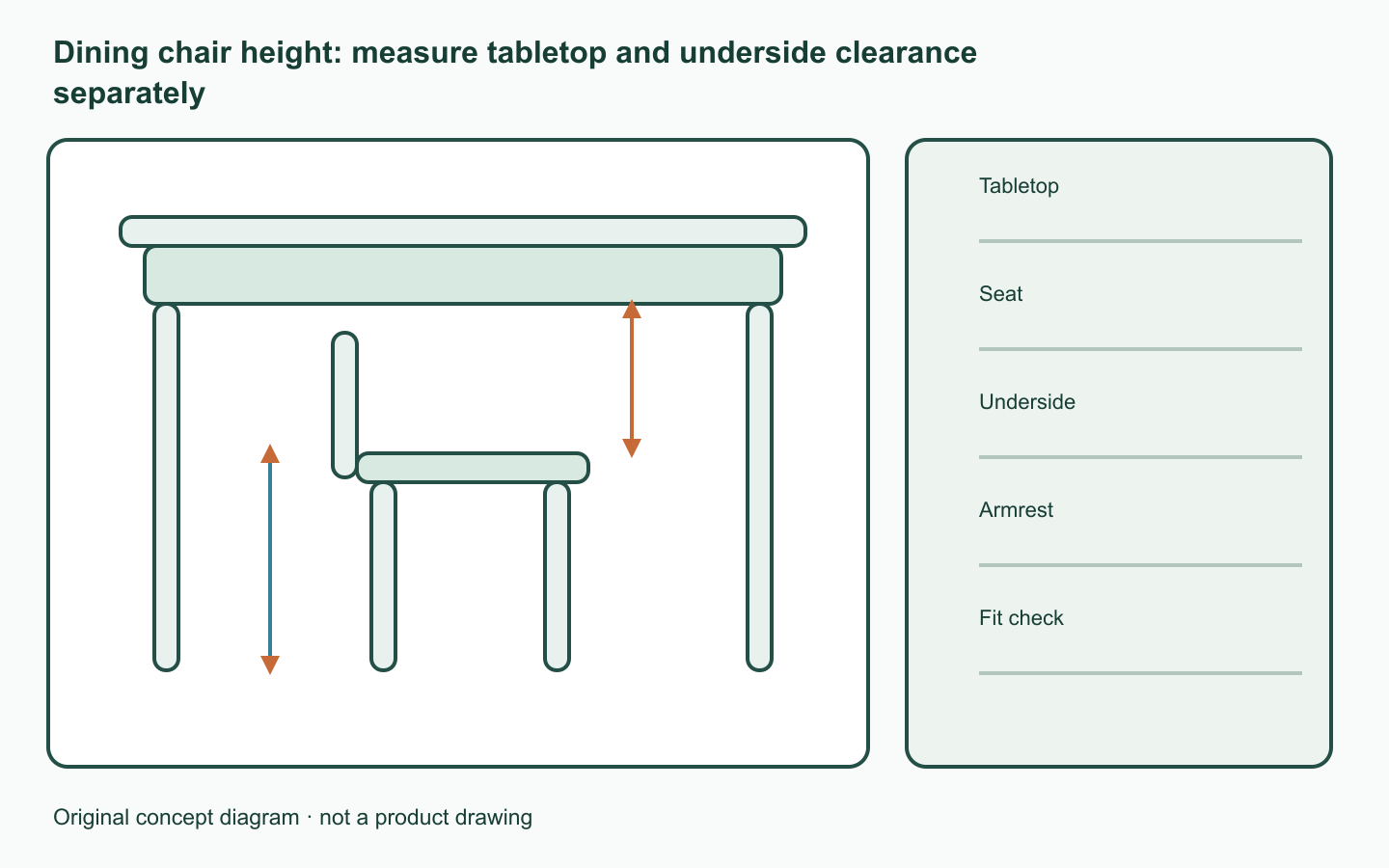
Top and apron use different references
A thick top or low apron reduces thigh space. For cushioned chairs, check the occupied seat height as well.
A guideline is not a fit guarantee
IKEA Switzerland’s FAQ describes the seat-to-table-underside gap. Regional advice may use different references; do not mix underside and tabletop measurements.
Record table and chair heights
Subtract seat height from the lowest underside height. Compare armrest height separately; actual comfort still needs a sitting check.
| Check | Record |
|---|---|
| Tabletop | Floor to top surface |
| Seat | Floor to occupied seating surface |
| Underside | Floor to lowest apron |
| Armrest | Floor to highest point |
| Fit check | Sit, knees and slide-in test |
Sit and slide the chair in
Check sitting, foot support, knee contact and armrest entry in store. Pulled-out chair floor space can be measured separately with the linked dining-rug guide.
A worked example
Hypothetical example: top 75 cm minus seat 45 cm gives 30 cm. An apron at 66 cm leaves only 21 cm above the seat. These are different clearances, not interchangeable values.
Official sources checked
Official sources checked on 12 October 2026. Apply the cited model and market conditions. Examples are hypothetical records, not hands-on tests.