A magnet sticking to a pan does not guarantee that every induction zone will detect it. Magnetism is the first check; the effective base size, flatness and position also matter. Before buying another pan, compare it with cookware that already works on the same hob.
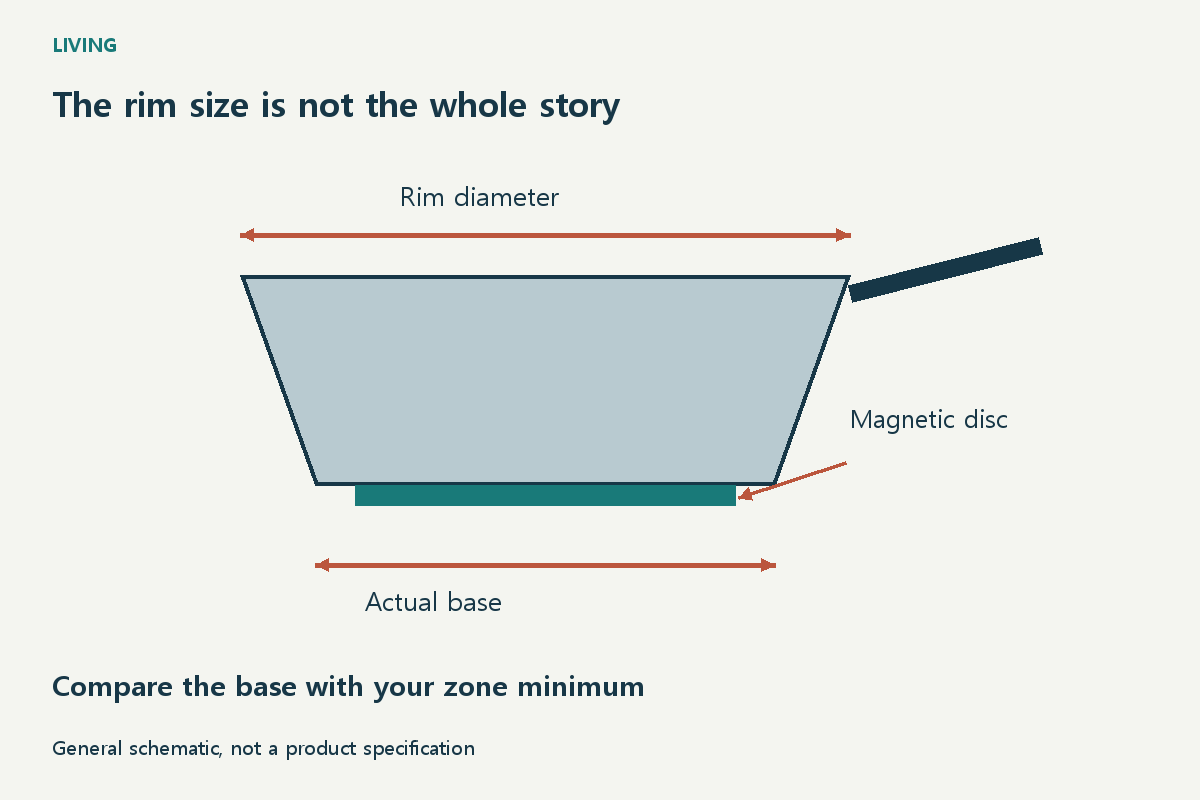
Measure the bottom, not just the rim
The size on a product listing does not necessarily describe the base that the hob detects. A pan may have a smaller magnetic disc underneath. Miele’s induction instructions address suitable bases and minimum cookware dimensions for its zones. Miele induction manual
With the hob off and the pan cool, inspect the underside. Look for the induction symbol or maker’s compatibility statement, a flat base and the extent of any separate metal disc. “The magnet sticks” is useful information, but it should not end the check.
Find the minimum size for your particular zone
A small saucepan failing on a large zone does not immediately establish that the pan is faulty. Compare its base with the minimum in your model’s manual. Do not borrow one minimum diameter from another hob or judge compatibility by lining up the top rim with the printed ring.
Make a short note: hob model / selected zone / minimum base diameter / actual base diameter. If there is a separate magnetic disc, record its diameter as well. These details give a cookware seller or service team more to work with than a general report that the pan “should be magnetic.”
Change one variable at a time
- When cool, check and clean the pan base and hob surface. LG’s guidance calls for a clean, dry base and cooking surface. LG induction instructions
- Centre the suspect pan on the zone and follow the manual for a low-power check with contents in the pan. Do not test an empty pan at high power.
- Try a known-compatible pan on the same zone.
- If appropriate for its size, try the suspect pan on another zone. Record each result separately.
| Result | Next check |
|---|---|
| Only this pan fails | Base size, material, distortion and the pan maker’s guidance |
| Only one zone fails | That zone’s minimum size, selection method and error code |
| Several known-good pans fail | Power, controls and errors in the manual; contact service if unresolved |
Prepare useful evidence for support
Take a photograph of the underside, another with a ruler across the base, and one of the displayed error. Include the hob model and zone used. This makes it easier to distinguish a compatibility question from a fault that needs inspection. The comparison narrows possibilities; it is not a repair diagnosis.
Do not try to defeat pan detection with loose metal plates or magnets. Check the hob manufacturer’s instructions before using an adapter. Stop testing if the glass is cracked or you notice a burning smell or abnormal heating, and use the manufacturer’s service route.
When shopping for a replacement, ask for the actual compatible base dimensions and the return conditions. A larger advertised rim size alone does not answer whether the base will work on your chosen zone.
Related guide
Before Buying an Appliance: Size, Energy Labels, and Manuals
Sources checked: 20 September 2026. Prepared and reviewed with AI assistance using official information. This is an informational guide, not a first-hand product test or site visit.