Matching window width is not enough for an inside mount. Separate the depth needed for the bracket from the depth needed to recess the whole headrail.
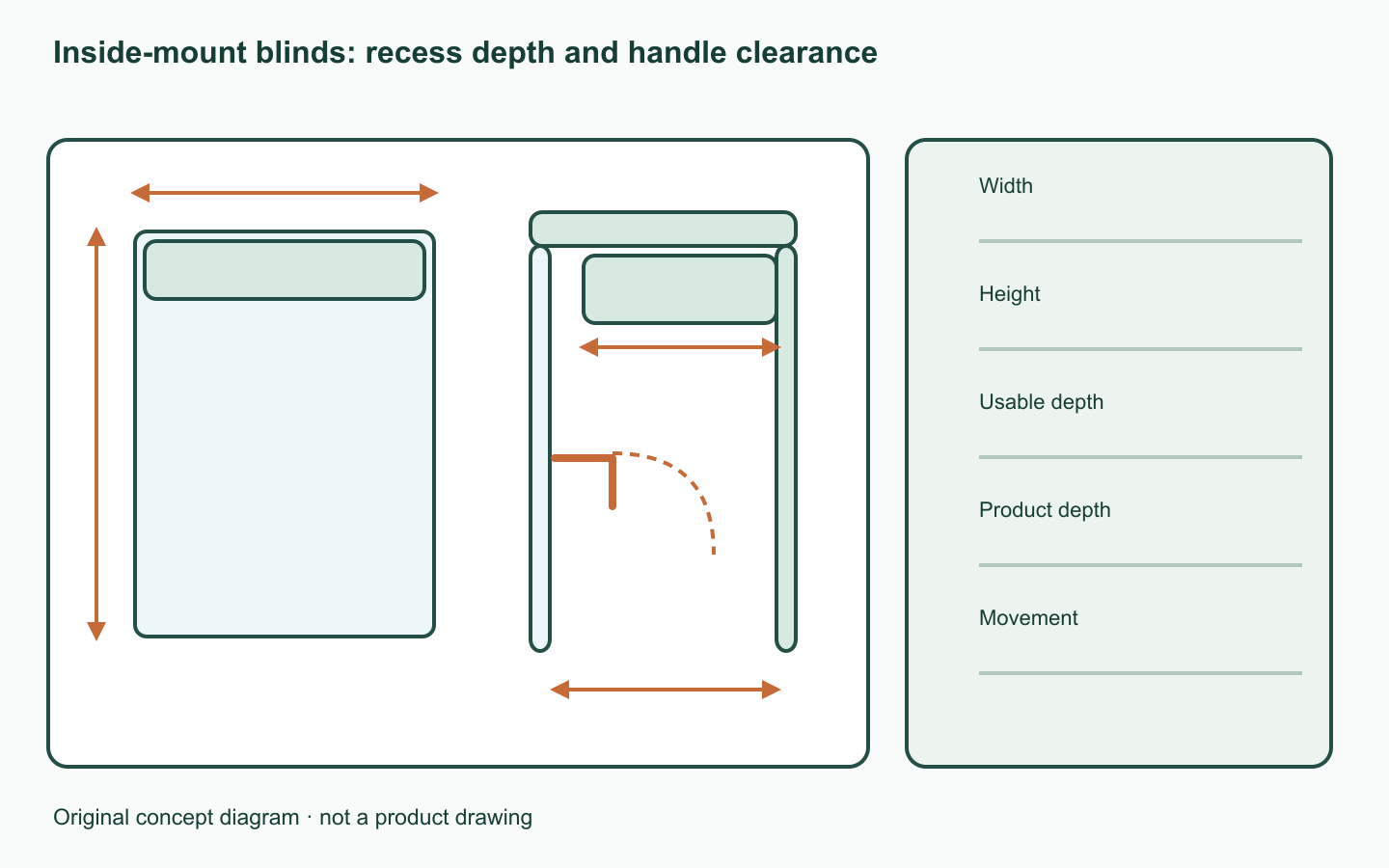
Measure usable recess depth
Measure available depth including the handle or lock’s movement. Check interference when opening the window too.
Minimum bracket versus flush depth
Hunter Douglas identifies shallow recesses and handle/crank obstruction as barriers to inside mounting. Required depth is product-specific.
Record before ordering
Record width at top, middle and bottom, then follow ordering instructions. Keep height, usable depth and hardware obstruction as separate fields.
| Check | Record |
|---|---|
| Width | Top, middle, bottom and order convention |
| Height | Product-required measurement positions |
| Usable depth | Exclude glass and moving hardware |
| Product depth | Bracket minimum and flush requirement |
| Movement | Handle and window-opening interference |
Confirm what order width means
Confirm whether the seller deducts clearance from order width; do not deduct twice. For accompanying curtains, calculate track and pleat width separately in the linked guide.
A worked example
Hypothetical candidate: usable depth 50 mm, bracket minimum 40 mm, flush depth 65 mm. Bracket fit and full recess give different results. Confirm the expected projection with the supplier.
Official sources checked
Official sources checked on 12 October 2026. Apply the cited model and market conditions. Examples are hypothetical records, not hands-on tests.